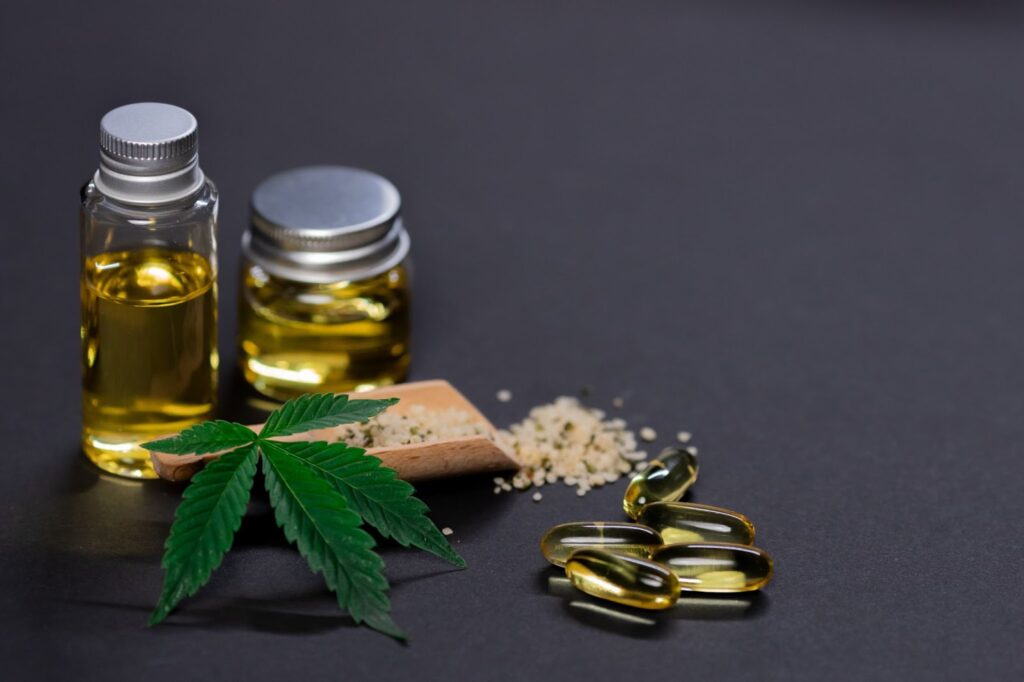
CBD may seem relatively new to us, but in reality the history of marijuana use is extensive. From here we will delve into the history of CBD. Medical marijuana has been in existence for thousands of years, however as a plant, cannabis sativa was one of the first agricultural crops planted by early man. This became very important in ancient societies. It is reported that the emperor of China, Sheng Neng in 2727 BC used a cannabis based tea. During this time period marijuana was intended to rectify a number of health problems, but CBD products such as CBD oil were not in existence, but the advantages were already being experienced.
Centuries later an Irish physician by the name of William B. O’Shaughnessy brought a quantity of cannabis with him on his return to Britain from Bengal in 1842. It is said that Queen Victoria used cannabis to alleviate the pain that is caused by monthly menstrual cramps and during this time you were able to buy it freely in shops in the United States. Once 1850 came rolling around, cannabis was added to the list of The U.S. Pharmacopeia. The United States Pharmacopeia is a highly respected compilation of medicines and dietary supplements.
The syringe was invented at the end of the 19th century, meaning that drugs were able to be injected and to start their process faster. Unfortunately cannabis failed at this hurdle as it couldn’t be dissolved in water. In 1928 at an international drug conference, an Egyptian delegate argued that cannabis was as dangerous as opium and was a threat to society. That same year the United Kingdom made cannabis illegal on September 28th 1928 as an addition to the Dangerous Drugs Act of 1920. Doctors were still able to prescribe it for medical purposes until 1971. Even though it was made illegal that did not stop people using it recreationally, specifically during the “flower power” era of the 1960’s.
The Wootton Report, a report that was carried out by the Home Office on Cannabis in 1968 stated, “the long term consumption of cannabis in moderate doses has no harmful effects… an increasing number of people, mainly young, in all classes of society are experimenting with this drug. Substantial numbers use it regularly for social pleasure. There is no evidence that this activity is causing violent crime, or is producing in otherwise normal people conditions of dependence or psychosis requiring treatment…”. Medical studies on potential benefits of cannabis have been ongoing and, in 1940, a prominent organic chemist, Roger Adams who was at the university of Illinois had successfully isolated CBD for the first time. Scientists then started testing individual cannabinoids from marijuana on lab animals. Having Walter S. Loewe, running the trials in 1946 to test THC, CBD and CBN. His results showed that while THC caused a type of trance in mice, CBD had no noticeable effects on behavior at all. Then in 1964, Dr. Raphael Mechoulam an Israeli scientist identified the structure and stereochemistry of CBD and THC which meant highlighting the THC as a psychoactive compound in marijuana. This was a major breakthrough! Now the use of cannabis has been effectively developed and CBD would be introduced as a non-intoxicating compound with a multitude of health benefits.
In 1978 the United States saw a breakthrough when New Mexico became the first state to legally acknowledge cannabis as a medicine. Dr. Mechoulam and his team of scientists discovered an improvement in children that were suffering from severe epilepsy after receiving CBD in the 1980’s. The most significant finding about CBD came in 1992 when the identification of the endocannabinoid system (ECS). The endocannabinoid system regulates aspects of our biology including pain, immune response, digestion, stress, mood, temperature and appetite, seeking to achieve balance and a stable internal environment.
Experts are not completely sure how CBD interacts with the ECS, they think that it either prevents endocannabinoids from being broken down or that it binds to a receptor. However, CBD stimulates and supports our natural endocannabinoid system and is very beneficial, having provided a plant-based relief from many health conditions. In 1998, Dr. Geoffrey Guy and Dr. Brian Whittle founded GW Pharmaceutical in the United Kingdom and they established the next breakthrough for CBD. GW Pharmaceuticals is a British pharmaceutics company known for its multiple sclerosis treatment product, nabiximols, which was the first natural cannabis plant derivative to gain market approval in any country. In 1998 the officially began clinical trials using CBD, exploring its potential in a number of areas that included epilepsy, glioma and schizophrenia.